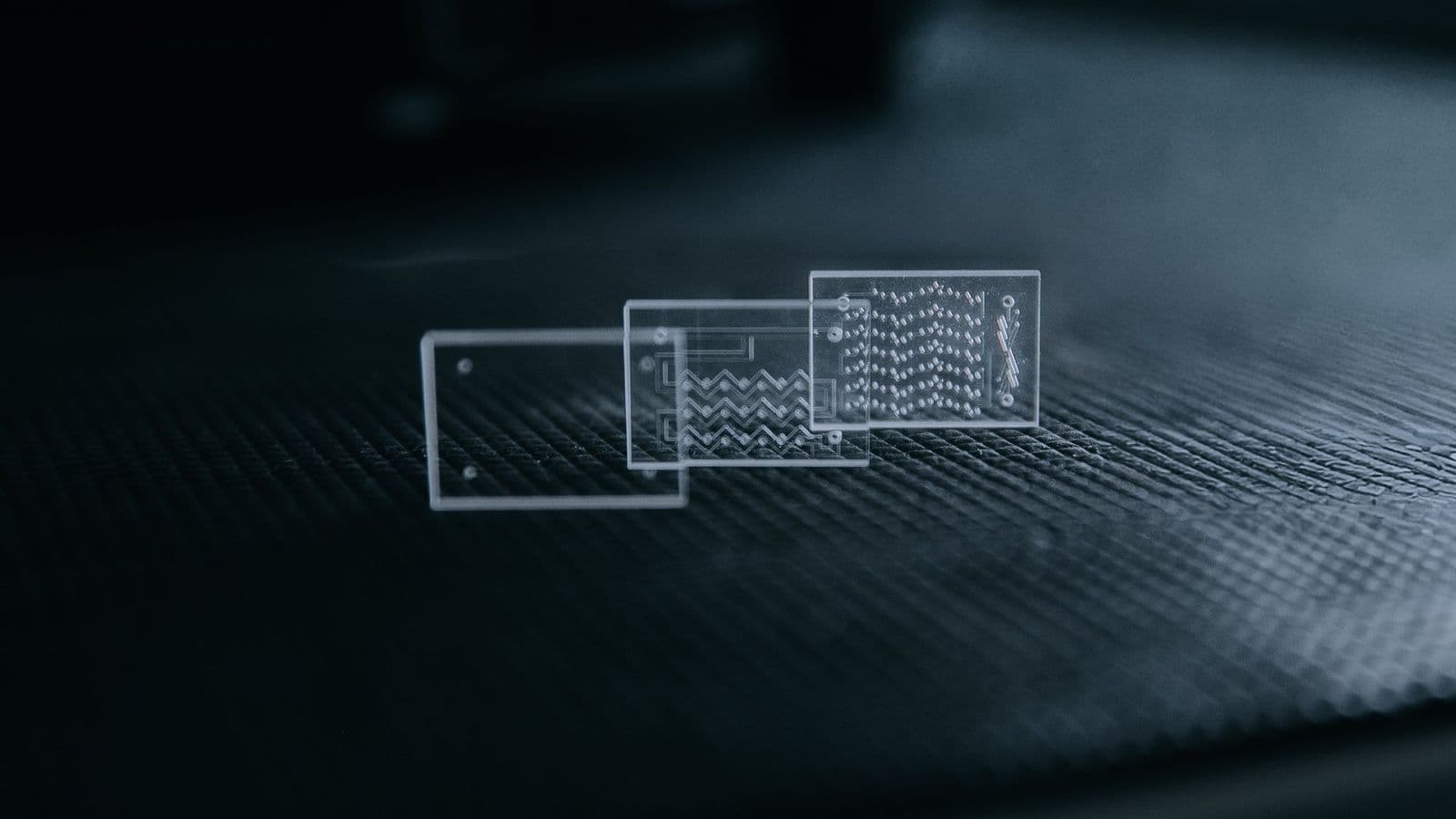
Custom Microfluidic Chips
Chips with the micro-geometry, material and surface your experiment needs: silicon-glass, glass, ceramics, Hastelloy or PDMS.
| Materials | silicon-glass, glass, ceramics, metal, Hastelloy, PDMS |
|---|---|
| Production | single prototype, geometry set or repeatable batch |
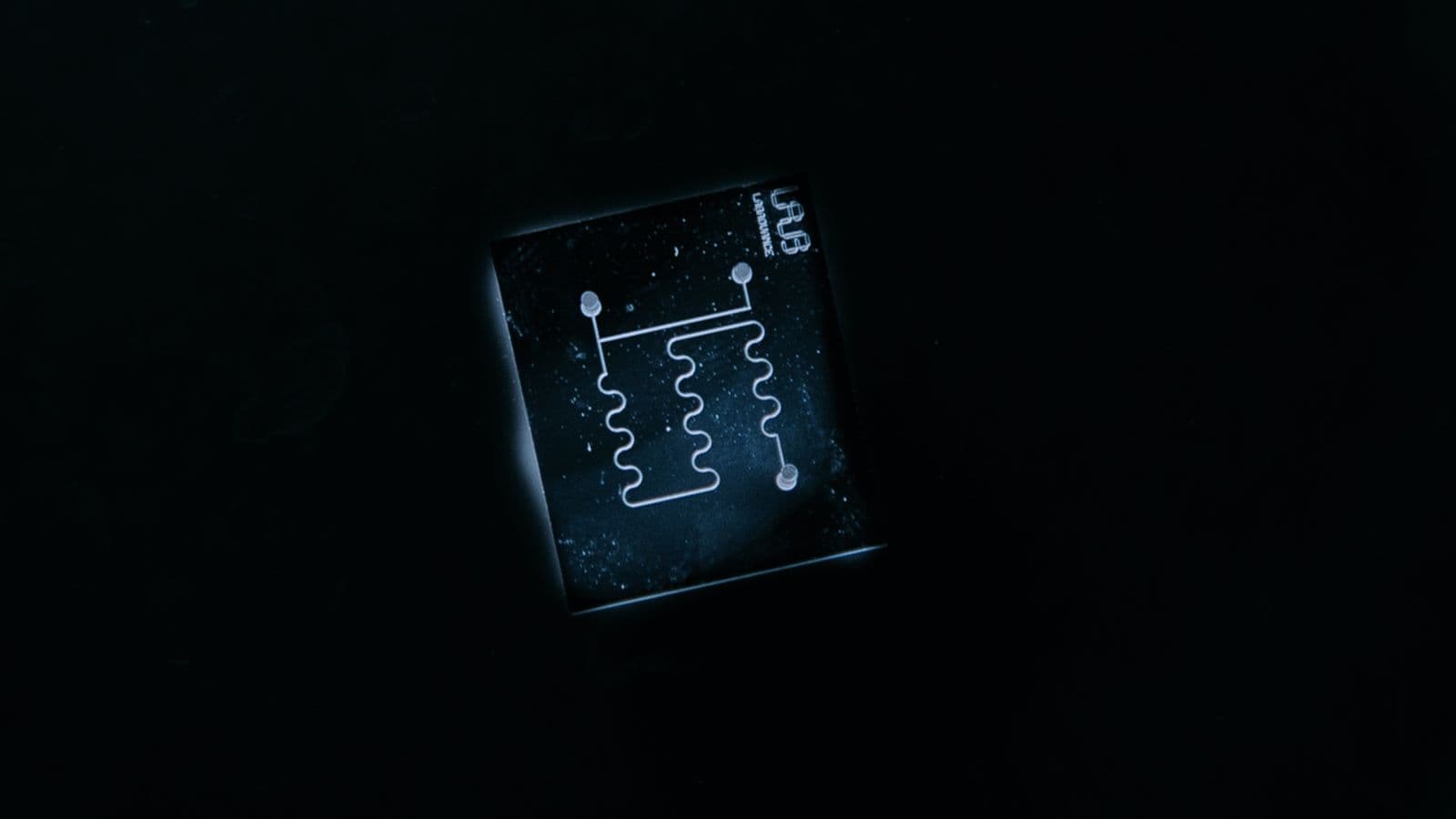
| Topologies | pore network, micromixer, droplet generator, reaction coil, gradient structure |
| Channel parameters | width, depth, length and volume — to specification |
| Surface | hydrophilic/hydrophobic treatment, functional coatings |
| Ports | number, position and format for capillaries, ferrules, fittings |
LABADVANCE designs each chip around the experiment: the process, working medium and observation method determine the material, channel topology, surface treatment and connection interface. Ports, mounting areas and the optical window are matched in advance to the cell the chip will run in.
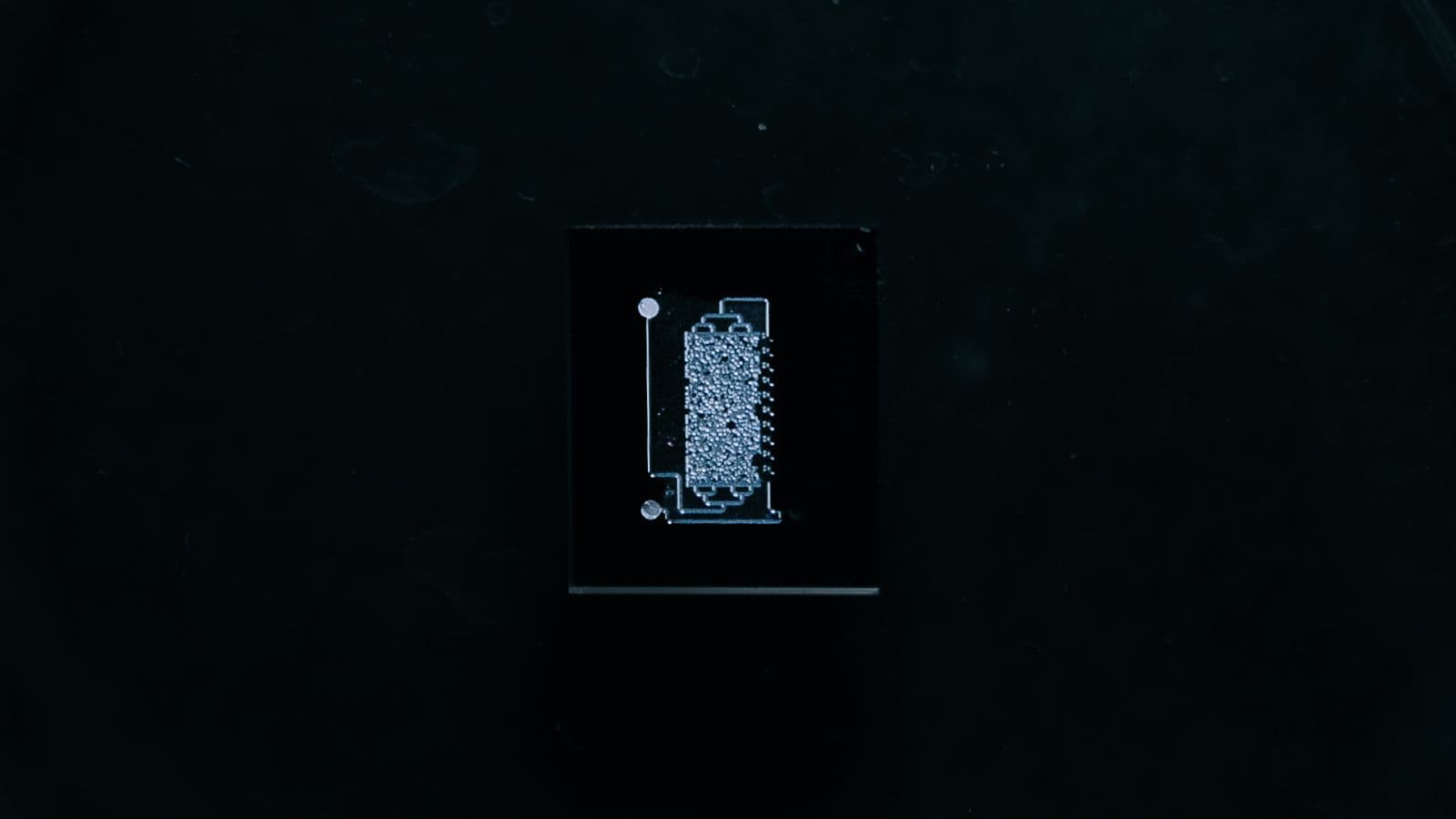
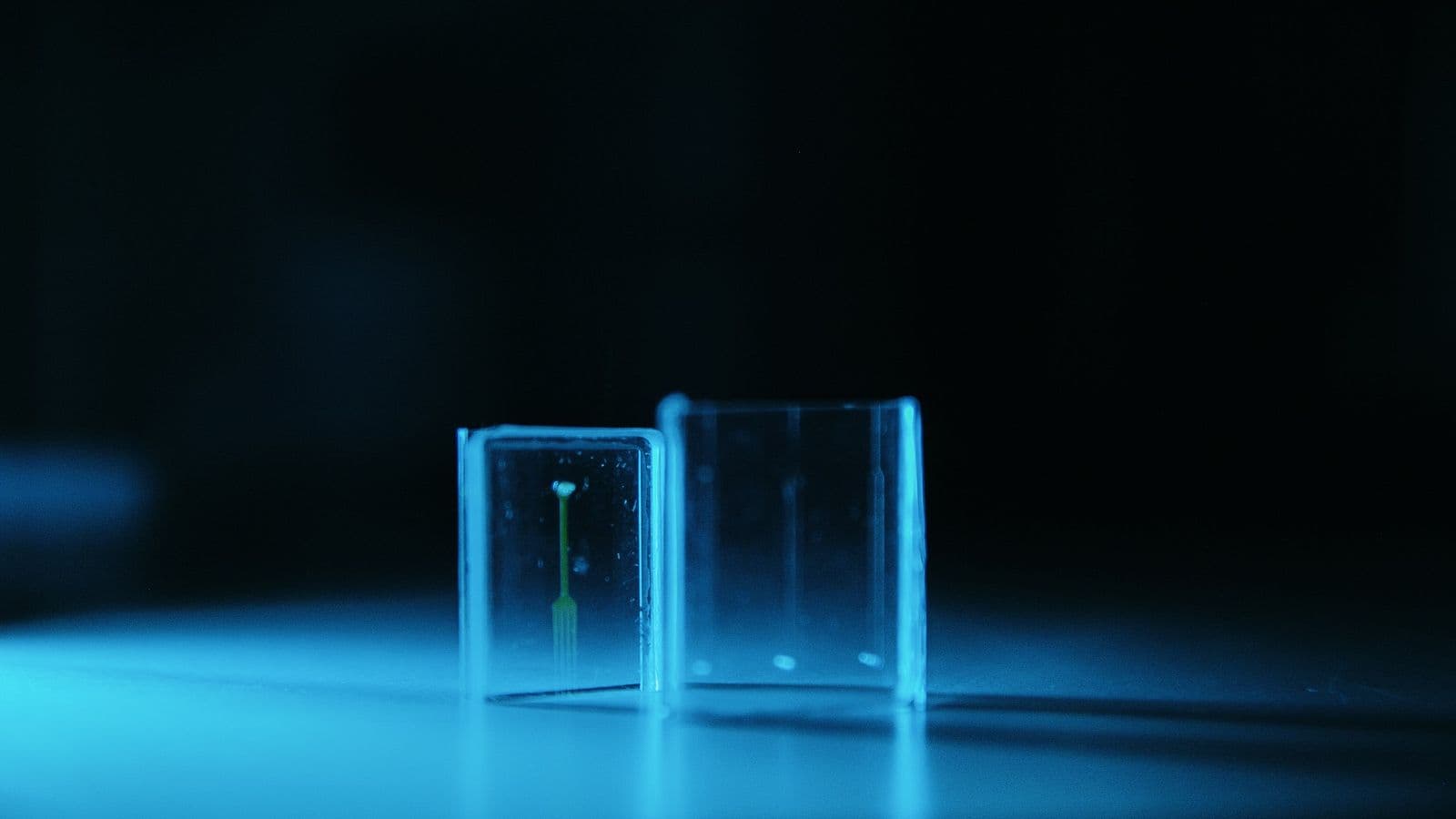
Chips are made in three lines. For oil and gas — silicon-glass pore-space micromodels for visualizing filtration, displacement, multiphase flow and EOR: pore networks, fractures, heterogeneity, dead-end pores. For flow synthesis — glass, ceramic and metal microreactors, including Hastelloy for aggressive media. For biomedicine — PDMS and glass chips for low pressure, biocompatible media and cell experiments.
A series of chips can vary a single parameter — depth, width, pore size or reaction-zone length — for comparative testing. Identical masks and controlled fabrication reduce run-to-run scatter, and swapping a chip lets you test a new hypothesis without rebuilding the setup.
Vervollständigen Sie System.
Vereinbaren Sie ein Treffen mit unserem Team