Encapsulation Chips
Microfluidic chip for generating monodisperse droplets, emulsions and microcapsules with controlled size.
| Geometry | Flow-focusing, T-junction |
|---|---|
| Droplet type | Monodisperse |
| Droplet size | 1–1000 um (nozzle-dependent) |
| Material | Borosilicate glass / polymer |
| Channel width | 14–500 um |
| Channel depth | 10–125 um |
| Inlets / outlets | 3 / 1 |
| Max pressure | up to 15 bar |
| Flow rate (water, 3 bar) | ~0.3 ml/min |
| Substrate format | 75 × 25 × 2 mm |
| Scale-up | Parallel-nozzle layout |
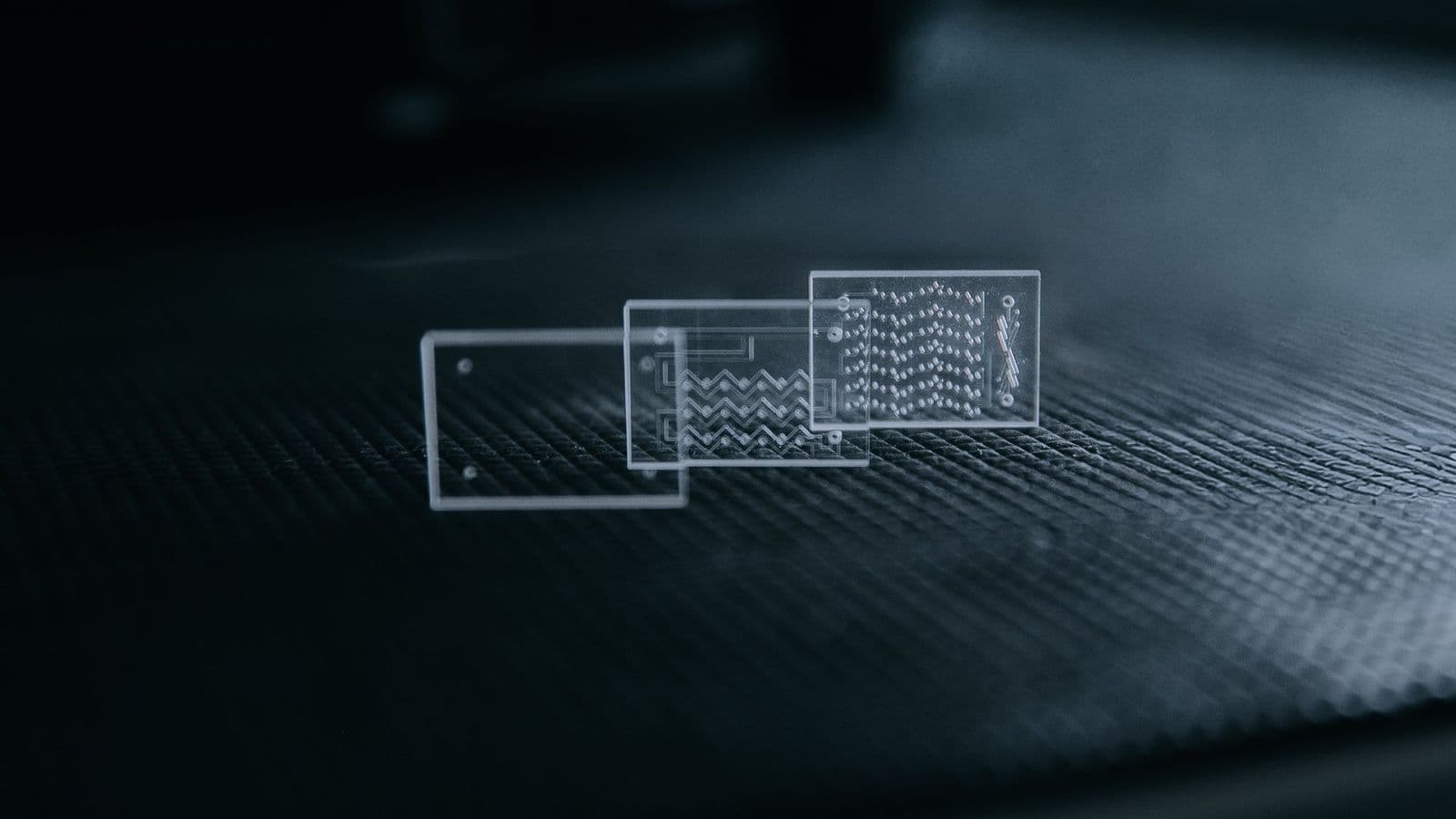
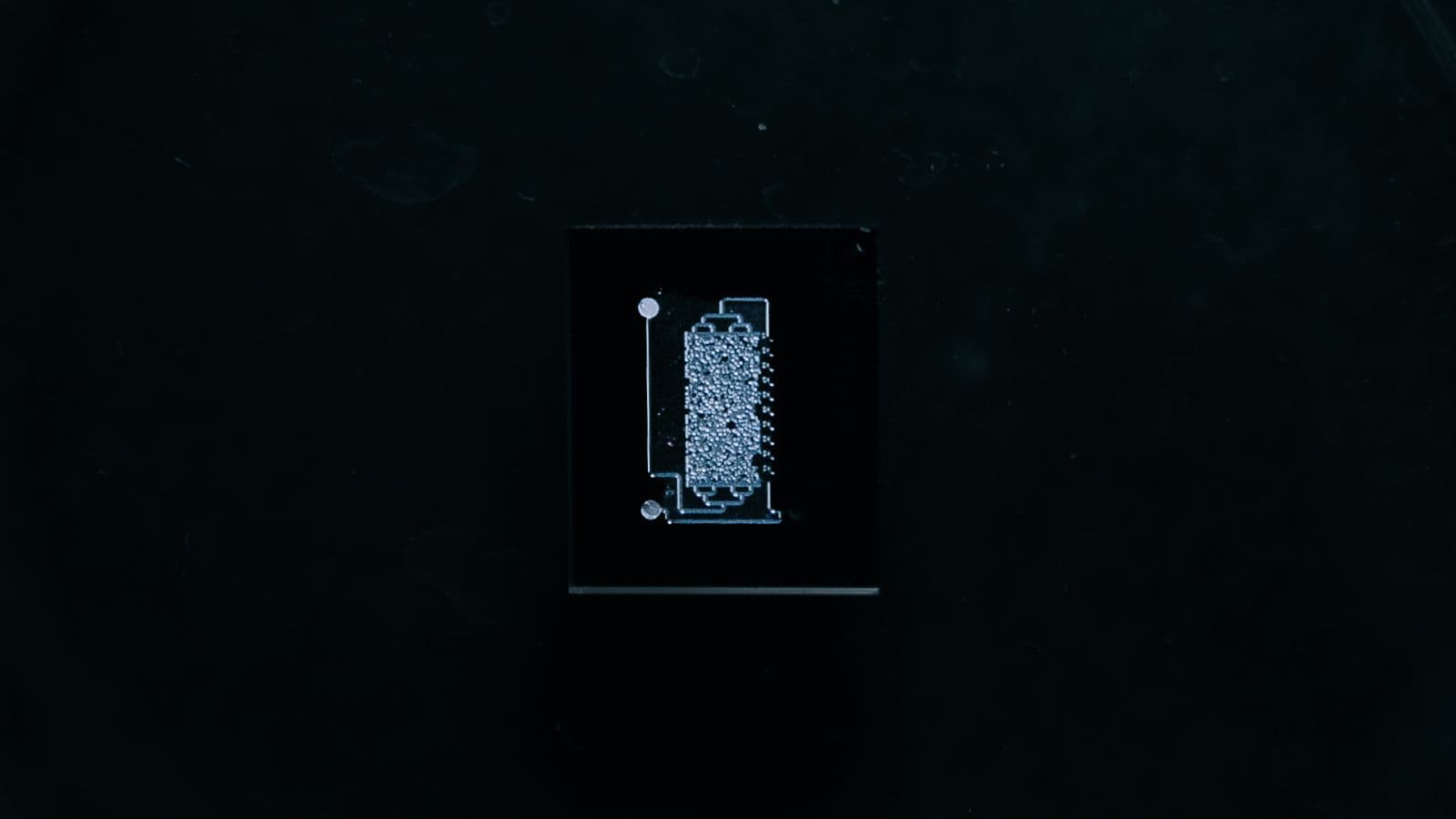
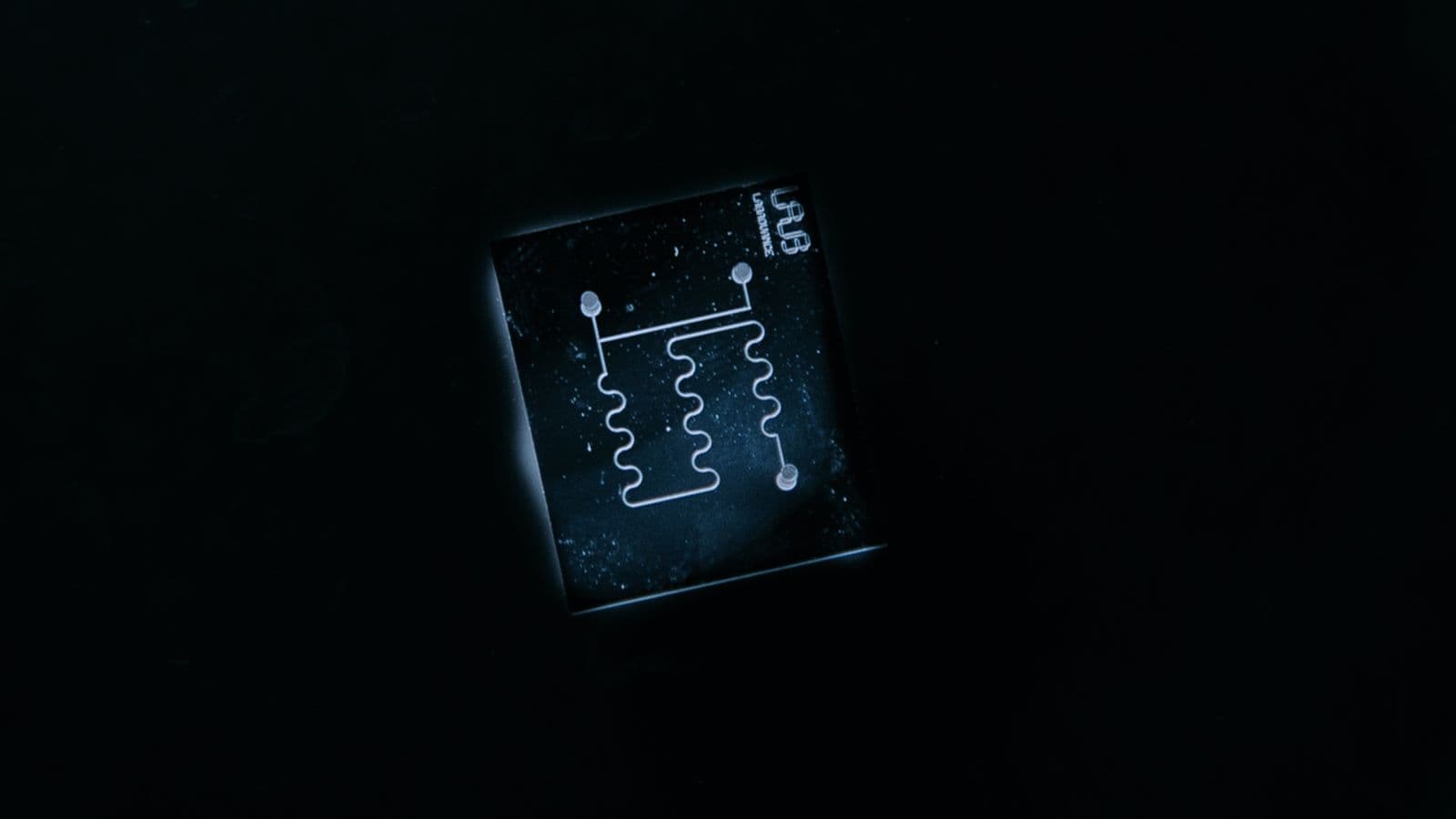
The chip implements flow-focusing and T-junction geometries for controlled droplet pinch-off. The dispersed phase is fed through a central inlet and pinched by two side streams of the continuous phase, giving a narrow size distribution and stable monodispersity without empirical tuning.
Droplet size is set by nozzle geometry and the phase flow-rate ratio, spanning roughly 1 to 1000 µm. Glass and polymer builds cover typical tasks: encapsulation of cells, particles and active compounds, nanoparticle synthesis and sample preparation.
The chip serves drug delivery, nutraceuticals, flavors and cosmetics. A standard substrate format and three-inlet layout ensure compatibility with the LA-Pump S series and common fluidic hardware; a parallel-nozzle layout is available for scale-up.